
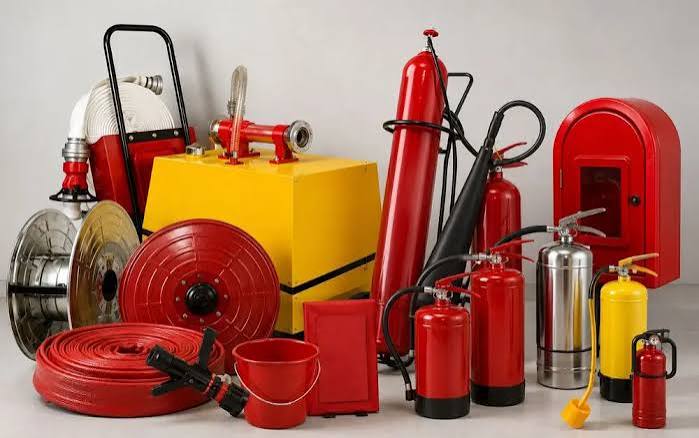
A fire extinguisher only works if someone is there to use it, and only if they reach the fire early. In a busy restaurant kitchen, an unattended server room, a generator house or a fuel store, a fire can grow out of control in minutes.
That is where a fire suppression system comes in. It detects a fire and puts it out automatically, often before people even notice. This guide explains how suppression systems work, the main types, which one suits your premises, and how to keep it ready.
What Is a Fire Suppression System?
A fire suppression system is a fixed fire protection system installed in a specific room or over a specific hazard. When it detects heat, smoke or flame, it automatically releases an extinguishing agent, such as a gas, wet chemical, foam, powder or water mist, directly where the fire starts.
Most systems follow the same four steps:
- Detect: heat or smoke detectors, or a heat-sensitive tube, sense the fire.
- Alert: an alarm warns people to leave the area.
- Release: the agent is discharged through nozzles onto the hazard.
- Shut down: many systems also cut fuel, gas or power to the equipment so the fire cannot restart.
Suppression Systems, Extinguishers and Alarms: How They Work Together
A suppression system does not replace other fire safety measures. It works alongside them:
- Fire alarms warn everyone to get out.
- Portable fire extinguishers let trained staff tackle small fires anywhere in the building. See fire extinguisher types explained to choose the right ones.
- A suppression system protects your highest-risk rooms automatically, 24 hours a day.
For a complete picture of protecting your business, read our guide to fire safety in Uganda.
Main Types of Fire Suppression Systems
Kitchen (Wet Chemical) Suppression Systems
Installed in the hood above cooking equipment in restaurants, hotels, schools and canteens. They spray a wet chemical agent that cools burning cooking oil and forms a layer that stops it reigniting. They usually shut off the gas supply to the cooking line at the same time. Water must never be used on an oil fire.
Clean Agent Gas Systems
These flood a closed room with a gas that puts out fire without leaving residue or damaging electronics. They are designed for server rooms, data centres, control rooms, archives and telecom rooms, where water or powder would destroy equipment and records.
Carbon Dioxide (CO₂) Systems
CO₂ systems put out fire by displacing oxygen. They are effective for electrical switch rooms, transformer rooms, generator enclosures, printing presses and machinery spaces. Because the concentration needed to put out a fire is dangerous to people, CO₂ total-flooding systems are used only in spaces that are normally unoccupied, with warning alarms and time delays so people can leave first.
Aerosol Systems
Compact units that release a fine aerosol which interrupts the fire’s chemical reaction. They are a cost-effective option for small enclosed spaces such as electrical panels, generator canopies, battery and inverter rooms, and vehicle engine bays.
Water Sprinklers and Water Mist
Sprinklers are common in warehouses, shopping centres, hotels and large commercial buildings. Water mist systems use far less water, cooling the fire with tiny droplets, which reduces water damage.
Foam Systems
Foam smothers flammable liquid fires by covering the fuel surface. They are used at fuel depots, petrol stations, oil storage tanks and chemical stores.
Dry Chemical (Powder) Systems
These discharge powder over the hazard and work on several fire types. They are used in some industrial settings, paint booths and vehicles, but leave a residue that needs cleaning afterwards.
Which Suppression System Suits Your Premises?
| Premises or hazard | Commonly recommended system |
|---|---|
| Restaurant, hotel or institutional kitchen | Wet chemical kitchen hood system |
| Server room, data centre, archive, control room | Clean agent gas system |
| Electrical switch room, transformer room (unoccupied) | CO₂ or clean agent system |
| Generator house, electrical panels, inverter/battery room | Aerosol or CO₂ system |
| Warehouse, mall, large commercial building | Sprinklers or water mist |
| Fuel station, depot, oil or chemical store | Foam system |
This table is a starting point. Every building is different, so a qualified fire safety engineer should assess your site before you choose.
Factors to Consider When Choosing a System
The Type of Fire Risk
Oil, electrical, flammable liquid and ordinary combustible fires each need a different agent.
Whether People Work in the Space
Some agents, especially CO₂ at flooding concentrations, are only suitable for spaces people do not normally occupy.
The Value of What You Are Protecting
Servers, records and sensitive machinery need a clean agent that leaves no residue. Water or powder could cause more damage than the fire.
Room Size and Sealing
Gas systems need an enclosed room that holds the gas long enough to put the fire out. Openings, gaps and ventilation must be assessed and, if needed, sealed.
Clean-Up and Downtime
Think about how quickly you need to be running again after a discharge.
Installation: Why It Must Be Done Properly
A suppression system is only as good as its design. The engineer calculates how much agent is needed for the room or hazard, where nozzles and detectors go, and how the system links to your alarms and power or gas shut-offs.
Poorly designed systems may discharge too little agent, miss the fire, or put people at risk. Always use a qualified, certified supplier, and ask for the design calculations and a commissioning test record.
Maintenance: Keeping Your System Ready
A suppression system may sit unused for years, then has seconds to work. Regular maintenance makes sure it will.
- Have it serviced by a competent technician at least once a year, or more often if the manufacturer or your insurer requires it. Kitchen systems are often serviced every six months because grease builds up on nozzles and detectors.
- Check cylinder pressure gauges regularly and report any drop.
- Keep nozzles and detectors clear of grease, dust, stored goods and paint.
- Test room integrity for gas systems after building changes such as new cable holes or doors.
- Train staff on what the alarm means, how to evacuate, and where the manual release and abort switches are.
- Keep records of every inspection, service and discharge.
Cylinders that form part of your system should be handled and stored correctly. See how to store gas cylinders safely. Portable extinguishers also need regular servicing and refilling.
Fire Protection From Oxyplus Services Ltd
Oxyplus supplies firefighting equipment across Uganda, including suppression systems, fire alarms, extinguishers, hoses, breathing apparatus and protective clothing. Because we also manufacture carbon dioxide, we understand the gases these systems depend on. Browse our products or view our certifications, including ISO 9001 and UNBS.
Visit us: Plot 192, Block 234, Jinja Road, Katuba (opposite Centenary Bank, Kireka Branch), Bweyogerere, Kampala. Call: 074 455 5510 / 020 099 5510 · Email: Info@oxyplus.co.ug
Not sure which system you need? Book a site assessment and our team will recommend the right protection for your premises.
Frequently Asked Questions
What is the difference between a fire suppression system and a fire extinguisher?
A fire extinguisher is portable and needs a person to operate it. A suppression system is fixed in place and detects and puts out fire automatically, even when no one is present.
Which fire suppression system is best for a server room?
A clean agent gas system is usually the best choice. It puts out fire without leaving residue or damaging electronic equipment.
Are CO₂ fire suppression systems safe for people?
CO₂ at the levels needed to put out a fire is dangerous to breathe. That is why CO₂ flooding systems are only used in normally unoccupied rooms, with alarms and time delays so people can get out first.
Does a restaurant kitchen need a fire suppression system?
Commercial kitchens with fryers and gas cooking lines face a high risk of oil fires. A wet chemical hood system is strongly recommended and may be required by your insurer or local fire authority.
How often should a fire suppression system be serviced?
At least once a year by a competent technician, and more often for kitchen systems or where the manufacturer or insurer requires it.