
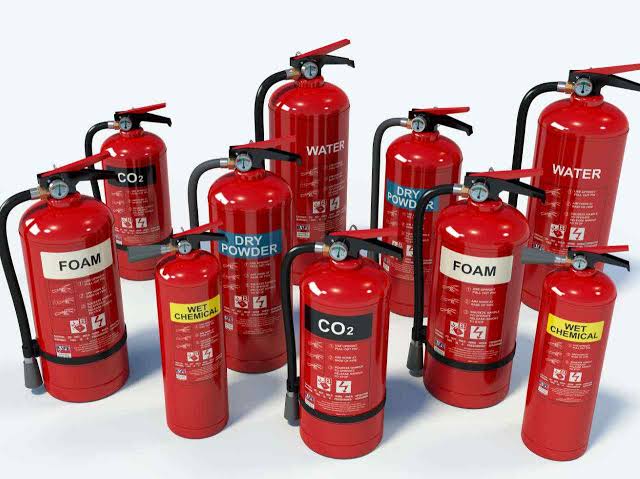
Walk into ten different businesses in Kampala and you’ll often find the same fire extinguisher hanging by the door in every one of them — regardless of whether that business is a restaurant kitchen, a server room, a fuel depot, or a retail shop. The problem is that no single extinguisher puts out every kind of fire. Using the wrong one doesn’t just fail to help — in some cases (like spraying water on an electrical or oil fire) it can make things dangerously worse.
If you’re responsible for fire safety at your business, home, or facility, this guide breaks down the main extinguisher types in plain language, so you can match the right equipment to the right risk.
Why Fire Class Matters
Fires are grouped into “classes” based on what’s burning, because different fuels behave differently and need different extinguishing methods. An extinguisher rated for one class may do nothing — or actively backfire — on another. Understanding the classes relevant to Uganda is the starting point for any fire safety plan.
- Class A – Ordinary combustibles: wood, paper, textiles, plastics, packaging materials
- Class B – Flammable liquids: petrol, diesel, paraffin, solvents, oils, paints
- Class C – Flammable gases: LPG, acetylene, and other gas leaks
- Class E (sometimes labelled electrical) – Fires involving live electrical equipment: wiring, switchboards, computers, machinery
- Class F – Cooking oils and fats, common in commercial kitchens
Most Ugandan businesses face a mix of these risks under one roof, which is why understanding extinguisher types — not just buying “an extinguisher” — matters.
The Main Extinguisher Types and What They’re Actually For
1. Water Extinguishers
Water extinguishers are effective on Class A fires (paper, wood, fabric, general combustibles) because they cool the burning material below its ignition point. They are not safe for electrical fires or flammable liquid fires — water can spread burning liquid or conduct electricity back toward the user. Best suited for offices, storerooms, and general administrative areas with mostly paper- and wood-based risk.
2. Foam Extinguishers
Foam extinguishers handle both Class A and Class B fires. The foam forms a blanket over the surface of a burning liquid, cutting off its oxygen supply and preventing re-ignition — something water alone can’t do on fuel. These are a strong fit for garages, workshops, fuel storage areas, and anywhere flammable liquids are handled alongside general combustibles.
3. Dry Powder (ABC) Extinguishers
Dry powder extinguishers are the most versatile option, rated for Class A, B, and C fires, which is why they’re widely used across mixed-risk sites in Uganda — warehouses, factories, workshops, and vehicles. The powder interrupts the chemical reaction of the fire. One trade-off: powder can reduce visibility during discharge and leaves residue that needs cleanup, so it’s less ideal in areas with sensitive electronics or food preparation.
4. CO2 (Carbon Dioxide) Extinguishers
CO2 extinguishers are the standard choice for electrical fires (Class E) because the gas leaves no residue and doesn’t conduct electricity. They work by displacing oxygen around the fire. These are essential near server rooms, control panels, generators, and switchboards. They’re less effective on deep-seated Class A fires since they don’t cool the material significantly, and re-ignition is possible if the fuel is still hot.
5. Wet Chemical Extinguishers
Wet chemical extinguishers are designed specifically for Class F fires — cooking oil and fat fires in commercial kitchens. They create a soapy layer over the burning oil that seals in vapours and cools the fire, which ordinary extinguishers can’t safely do on hot fat fires. Any restaurant, hotel kitchen, canteen, or catering business should have at least one of these near the cooking area.
Matching Extinguishers to Common Uganda Business Settings
| Setting | Primary Risk | Recommended Extinguisher |
|---|---|---|
| Office / admin building | Paper, furniture (Class A) | Water or ABC powder |
| Commercial kitchen / restaurant | Cooking oil (Class F) | Wet chemical, plus ABC powder as backup |
| Warehouse / factory floor | Mixed materials, packaging, machinery (A, B, C) | ABC dry powder |
| Garage / fuel storage | Fuel and oil (Class B) | Foam or dry powder |
| Server room / control room | Electrical equipment (Class E) | CO2 |
| Vehicles / fleet | Fuel and electrical (B, E) | Small dry powder or CO2 unit |
If your site has more than one of these risk types under one roof — which is common — you’ll usually need more than one extinguisher type, placed near the relevant risk area rather than a single unit for the whole building.
Sizing, Placement, and Servicing
Choosing the right type is only half the job. A few practical points that get overlooked:
- Placement: Extinguishers should be mounted at accessible heights, near exits and identified risk points, not buried behind stock or furniture.
- Sizing: A small 1kg unit may be fine for a car; a warehouse needs larger-capacity units placed at intervals across the floor.
- Signage: Clear, visible signage helps staff and visitors locate extinguishers quickly under stress.
- Servicing: Extinguishers lose pressure and effectiveness over time. Routine inspection and professional servicing (checking pressure gauges, seals, and refill status) is what keeps them reliable when you actually need them — not just having one hanging on the wall.
- Staff training: The best extinguisher is only useful if staff know which one to grab and how to use it under pressure. Even a short, practical briefing makes a real difference.
A Simple Way to Think About It
If you’re not sure where to start, ask three questions about each area of your business:
- What’s the main fuel source here — paper, liquid, gas, electrical, or cooking oil?
- Is this a high-traffic area where people would need to react quickly?
- Is there specialist equipment (servers, machinery, kitchen appliances) that needs a specific extinguisher type?
Answering these for each zone of your premises will usually make the right extinguisher choice fairly obvious — and it’s a far more reliable method than guessing or copying what the business next door has on their wall.
Get the Right Fire Safety Setup for Your Business
At OxyPlus, we supply and service a full range of fire extinguishers — water, foam, dry powder (ABC), CO2, and wet chemical — along with the gauges, signage, and inspection support to keep them compliant and ready to use. If you’re setting up fire safety for a new site, or you’re not sure your current extinguishers match your actual risks, get in touch with our team for a straightforward assessment.
Frequently Asked Questions
1. Can I use one type of fire extinguisher for my entire business?
Only if your business has a single, uniform fire risk — which is rare. Most sites combine general combustibles with either electrical equipment, flammable liquids, or cooking oils, so a mix of extinguisher types placed near the relevant risks is safer than relying on one unit for everything.
2. What extinguisher is best for a small office in Uganda?
For a typical office with paper, furniture, and computers, a water or ABC dry powder extinguisher for general areas, paired with a CO2 unit near server rooms or electrical panels, covers most realistic risks.
3. Why can’t I use water on an electrical or oil fire?
Water conducts electricity, which creates a shock risk on live electrical fires, and it can cause burning oil to splash and spread rather than smother it. Both situations need extinguishers designed specifically for those fuel types (CO2 for electrical, foam or wet chemical for oils).
4. How often should fire extinguishers be serviced?
Extinguishers should be visually checked regularly and professionally serviced at least annually to confirm pressure, seals, and overall condition are within safe operating range — more frequently in high-use or high-risk environments.
5. Do I need a wet chemical extinguisher if I already have an ABC powder unit in my kitchen?
Yes, for commercial cooking with oil or fat. ABC powder isn’t rated to safely handle a hot cooking-oil fire the way wet chemical extinguishers are, so kitchens are one of the few areas where you genuinely need a dedicated unit rather than relying on a general-purpose extinguisher.
6. Who can help me choose and install the right extinguishers for my premises?
A qualified fire safety supplier can assess your site’s specific risks — materials handled, equipment used, layout, and occupancy — and recommend the right extinguisher types, sizes, and placement, along with ongoing servicing.