
Every cold soda poured in a Kampala bar, every bag of crisps that still snaps when you open it, and every batch of packaged meat that reaches a supermarket shelf in good condition depends on something you can’t see: food grade gas. For Uganda’s growing food and beverage sector, choosing the right gas, at the right purity, from a properly certified supplier, is the difference between a product that sells and a product that spoils.
What Makes a Gas “Food Grade”?
Food grade gases are the same molecules used in industry — carbon dioxide, nitrogen, and sometimes oxygen or argon blends — but produced, filtered, and handled to a standard that makes them safe for direct contact with food and drink. The difference lies in purity levels, the absence of oil, moisture, and odour-carrying contaminants, and in traceability: proper documentation showing what was in the cylinder and where it came from.
This matters because industrial-grade CO₂ may carry trace impurities that are harmless in a welding shop but can taint the flavour of a beverage or introduce contamination into a sealed food package. Using industrial gas in a food application is one of the most common and most costly shortcuts in the sector.
The Main Food Grade Gases and What They Do
Carbon dioxide (CO₂). The workhorse of the beverage industry. CO₂ provides the carbonation in sodas, sparkling water, and beer, and is used to push draught beer through dispensing lines. It also acts as an antimicrobial in packaging, since many spoilage organisms struggle to grow in a CO₂-rich atmosphere.
Nitrogen (N₂). Inert, odourless, and tasteless, nitrogen is used to displace oxygen inside packaging — the reason a sealed packet of crisps is puffed up. Removing oxygen slows oxidation, which is what makes oils go rancid and coffee lose aroma. Nitrogen is also used to pressurise flexible containers so they resist crushing in transit, and for nitro-style coffee and stout dispensing.
Gas blends for MAP. Modified Atmosphere Packaging uses tailored mixes of CO₂, nitrogen, and sometimes a small amount of oxygen to extend shelf life. The right ratio depends entirely on the product: fresh red meat needs some oxygen to keep its colour, while cheese and baked goods do better in a high-CO₂, oxygen-free atmosphere.
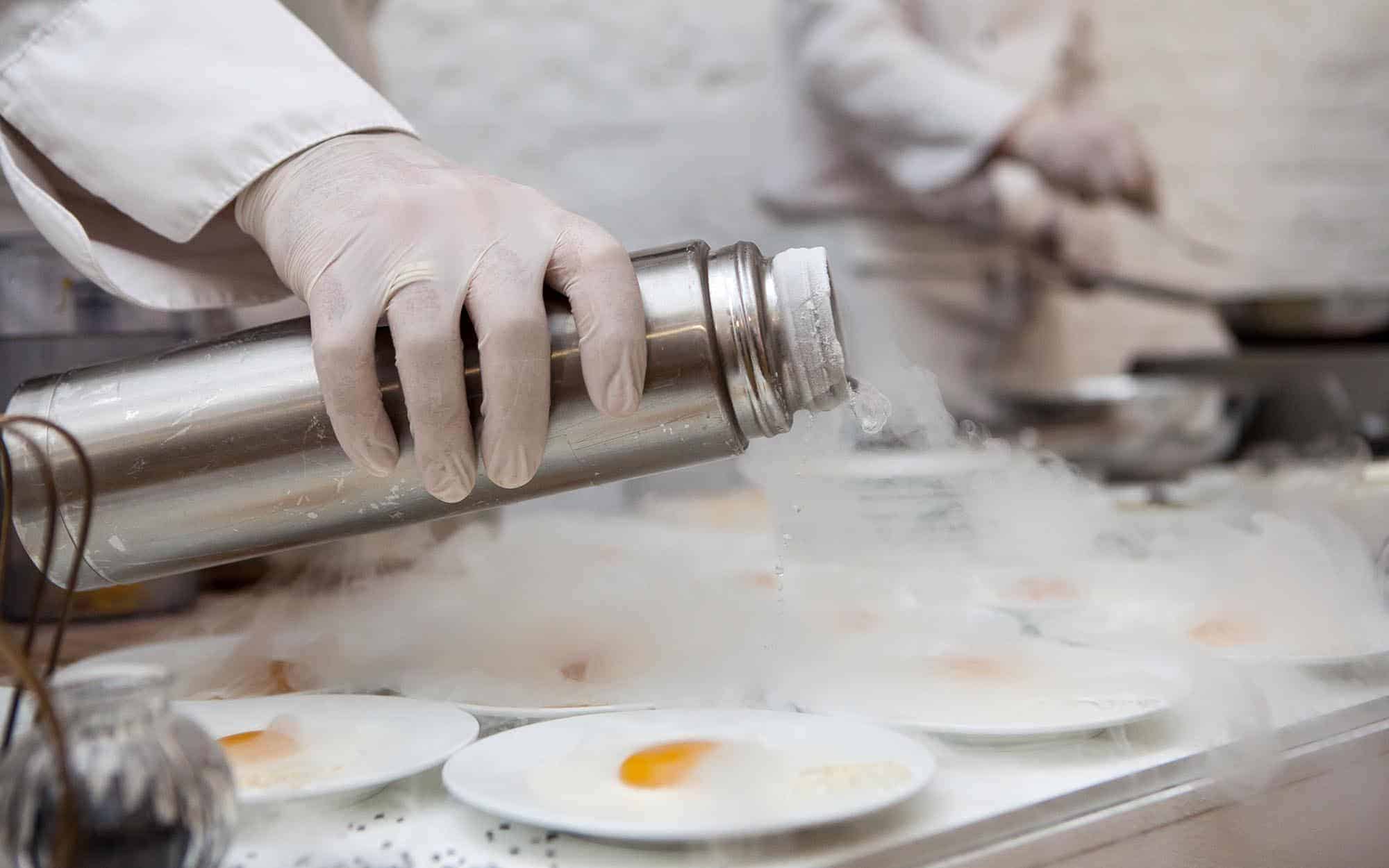
Dry ice (solid CO₂). Used for cold chain transport of dairy, meat, ice cream, and other perishables where mechanical refrigeration isn’t practical, and for cleaning food processing equipment without water or chemical residue.
Where Ugandan Businesses Use Them
- Breweries, distilleries, and soft drink bottlers for carbonation, tank blanketing, and line purging
- Bars, restaurants, and hotels running draught beer and post-mix soda systems
- Meat processors, dairies, and bakeries using MAP to extend shelf life without preservatives
- Coffee roasters and exporters flushing packaging with nitrogen to protect aroma during long shipping times
- Supermarkets and cold chain distributors moving perishables across the country
- Food processors using dry ice blasting to clean equipment between production runs
Why Purity and Supplier Certification Matter
A gas that goes into food is, in effect, an ingredient. If a cylinder has previously carried an industrial gas and was not properly cleaned and dedicated to food service, residue can carry through. If moisture is present, it can support microbial growth inside the cylinder or line. And if there’s no certificate of analysis, there’s no way to prove to an auditor, a buyer, or UNBS that your inputs met standard.
Before you commit to a supplier, it’s worth asking a few direct questions:
- Can you provide a certificate of analysis? for each batch or delivery, showing purity levels.
- Are your food grade cylinders dedicated? and clearly marked, so they are never cross-filled with industrial gas.
- What certifications do you hold? ISO 9001, UNBS approval, and relevant regulatory registration are a reasonable baseline.
- How is filling controlled? Ask about testing, valve maintenance, and cylinder inspection intervals.
Practical Handling Tips for Food Businesses
- Store cylinders upright, secured with a chain or strap, in a well-ventilated area away from heat and direct sun.
- Never store food grade and industrial cylinders in a way that makes them easy to confuse — separate and label clearly.
- Use the correct regulator for each gas; regulators are not interchangeable between gas types and pressures.
- Remember that CO₂ and nitrogen are asphyxiants. In enclosed cellars, cold rooms, or storerooms, ensure ventilation and consider a gas detector.
- Track cylinder turnover so stock rotates and no cylinder sits unused for long periods.
- Train staff on leak checks, safe changeover, and what to do if a cylinder is damaged or a valve sticks.
Getting the Mix Right Is a Business Decision
The right gas and the right ratio can add days or weeks to a product’s shelf life, cut spoilage losses, and open up distribution to markets further from your production site. The wrong one quietly costs money through returns, complaints, and product that doesn’t travel well. It’s worth working through your specific product, packaging material, and distribution distance with a supplier who understands the application rather than simply filling an order.
Talk to Oxyplus About Food Grade Gas Supply
Oxyplus Services Ltd manufactures and supplies oxygen, nitrogen, and carbon dioxide in Uganda, including food grade gases, dry ice in 3mm, 9mm, 10mm and 12mm pellet sizes, regulators, and cylinder accessories. We work with breweries, food processors, hospitality businesses, and distributors across the country, backed by ISO 9001 certification and UNBS approval.
- Plot 192, Block 234, Jinja Road – Katuba, Opposite Centenary Bank Kireka Branch, Bweyogerere Division, P.O. Box 164148, Kampala, Uganda
- Phone: 074 455 5510 / 020 099 5510
- Email: Info@oxyplus.co.ug
Contact our team to discuss the right gas, cylinder size, and delivery schedule for your food or beverage operation.