
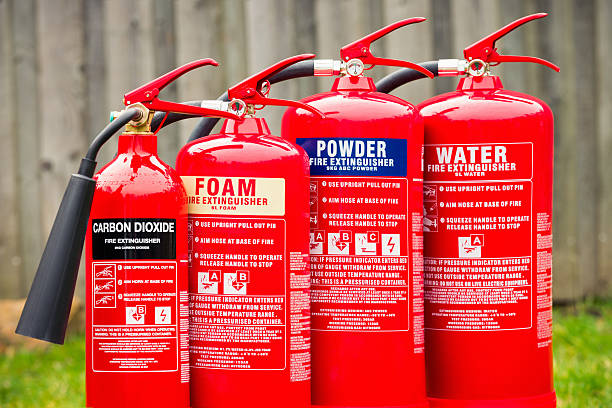
Most businesses in Kampala remember to buy fire extinguishers. Far fewer remember to look after them. An extinguisher that has sat on a wall for three years with a low gauge, a blocked nozzle or a missing safety pin is not protection. It only looks like protection.
This guide explains, in plain language, how often a fire extinguisher should be checked, what happens during a professional service, when it needs refilling, and when it is simply time to replace it. If you are still deciding which type to buy, start with our guide to fire extinguisher types explained and then come back here.
Quick answer: Check every extinguisher visually once a month, have each one professionally serviced at least once a year, refill it immediately after any use (even a short burst), and replace it if the cylinder is damaged, corroded or fails a pressure test.
Why extinguishers fail when you need them most
An extinguisher is a pressurised cylinder with moving parts. Over time things go wrong quietly:
- Pressure loss. Seals and valves can leak slowly, so the gauge needle drifts out of the green zone.
- Powder caking. In dry powder units, vibration and moisture can compact the powder so it sprays weakly or not at all.
- Corrosion. Humid conditions, kitchens, coastal-style moisture, and workshops with chemicals can corrode the cylinder base and valve.
- Blocked or damaged hoses and nozzles. Insects, dust and rough handling are common culprits.
- Tampering. Broken tamper seals or missing safety pins often mean someone has already discharged the unit, and nobody reported it.
None of these problems is visible from across the room. That is why a simple inspection routine matters.
The three levels of extinguisher care
| Level | How often | What it involves |
| Monthly visual check | Every month, by a staff member | Is it in its place, easy to reach and clearly signed? Is the gauge in the green? Are the pin and tamper seal intact? Any dents, rust, leaks or damage to the hose? |
| Professional service | At least once a year, by a competent technician | Full inspection of the cylinder, valve, hose and nozzle; checking the weight and pressure; checking the contents; replacing seals or parts; tagging the unit with the service date. |
| Pressure testing and overhaul | At longer intervals set by the manufacturer and the type of extinguisher | The cylinder is tested to confirm it can still safely hold pressure; contents are replaced; the unit is refilled and resealed. |
The exact long-interval testing schedule depends on the extinguisher type, the cylinder material and the manufacturer’s instructions. Ask your supplier for the schedule that applies to each unit you own, and keep a written record.
A simple monthly checklist you can print and use
- Location: the extinguisher is where it should be, visible, and not blocked by boxes, stock or furniture.
- Signage: a sign shows its location and what it is used for.
- Gauge: the needle is in the green zone (not applicable to some CO₂ units, which are checked by weight).
- Safety pin and tamper seal: both are in place and unbroken.
- Body: no dents, rust, oil, leaks or cracks.
- Hose and nozzle: no cracks, blockages or perished rubber.
- Label and service tag: still readable, with a current service date.
- Record: initial and date the check on a log sheet.
If anything fails this check, do not wait for the annual service. Remove the unit, put a replacement in its place and call your supplier.
What happens during a professional service
A proper service goes well beyond looking at the gauge. A competent technician will normally:
- inspect the outside of the cylinder for corrosion, dents and damage;
- check the pressure, or the weight in the case of CO₂ extinguishers;
- check that the discharge hose, nozzle and valve are clear and working;
- examine the contents, for example checking dry powder for lumps or moisture;
- replace worn O-rings, seals, pins or tamper indicators;
- refill or recharge where needed and re-pressurise correctly;
- attach a new service tag so you can see at a glance when it was last done.
Ask your supplier whether they can issue a service record for your files. It also helps when insurers, landlords or inspectors ask for proof that your equipment is maintained.
When does an extinguisher need refilling?
Refilling (recharging) is needed in these situations:
- After any use. Even a few seconds of discharge can leave the unit with too little pressure or contents to be reliable. Never put a used extinguisher back on the wall.
- After pressure loss. If the gauge is in the red, the unit has lost pressure and should be checked and recharged.
- After a failed service check. If the technician finds degraded contents, they should be replaced.
- After a pressure test. Once the cylinder is tested and passed, it is refilled and resealed.
Keep in mind that refilling should only be done with the correct agent for that extinguisher. A water extinguisher cannot be topped up with powder, and CO₂ requires proper filling equipment. Many common refilling mistakes come from using the wrong material or from refilling a cylinder that should have been retired. CO₂ extinguishers use carbon dioxide, which OxyPlus manufactures. See our industrial gases range for more on the gases we supply.
Signs it is time to replace, not refill
Refilling a bad cylinder is money wasted. Replace the extinguisher if you see:
- deep rust, pitting or flaking paint at the base or seams;
- dents, bulges or cracks in the cylinder;
- a damaged or leaking valve that cannot be repaired;
- a label that is unreadable or an extinguisher with no identifiable manufacturer;
- a unit that has failed a pressure test;
- a model for which spare parts or agents are no longer available.
If you are replacing units, take the opportunity to check that you have the right type for each risk. Offices, kitchens, generator rooms and workshops all have different needs. Our fire extinguishers range covers the main types, and our article on choosing the best fire extinguisher supplier in Uganda explains what to compare on price and quality.
Where to place and how many to keep
Servicing means little if the extinguisher is in the wrong place. As a general rule:
- place units near exits and along escape routes, not hidden in corners or behind doors;
- mount them so the handle is at a height that people of all sizes can reach;
- put a CO₂ or other suitable unit close to electrical equipment, server rooms and generator areas;
- keep a suitable unit near kitchens or any cooking area;
- make sure every staff member knows where they are and has been shown how to use one.
A fire extinguisher is only the first line of defence. For larger premises, combine extinguishers with detection and alarms. Read how fire alarms help save lives and property, and our broader guide to fire safety in Uganda for businesses, homes and teams. If you run a store or production site, also see our fire safety tips for warehouses and factories.
How to use an extinguisher: the PASS method
Training makes the difference between a small incident and a major fire. Teach staff the PASS method:
- Pull the safety pin.
- Aim the nozzle at the base of the fire, not the flames.
- Squeeze the handle.
- Sweep from side to side until the fire is out.
Only fight a fire if it is small, you have a clear escape route behind you and you have raised the alarm. If in doubt, get out and call for help.
Choosing a servicing partner
When you compare servicing providers, ask these questions:
- Are the technicians trained, and can the company show relevant certifications?
- Do they use the correct agent and genuine parts for each extinguisher?
- Will they tag each unit and give you a service record?
- Can they lend or provide replacement units while yours are being serviced, so you are never uncovered?
- Do they also supply and manufacture the gases and equipment, so there are no delays?
OxyPlus Services Ltd supplies fire-fighting equipment and manufactures CO₂, oxygen and nitrogen in Uganda. You can review our certifications and learn more about our company before you decide.
Frequently asked questions
How often should a fire extinguisher be serviced?
Check it visually every month and have it professionally serviced at least once a year. Longer-interval pressure testing depends on the extinguisher type and the manufacturer’s guidance.
Can I refill a fire extinguisher myself?
It is not recommended. Recharging requires the correct agent, pressure and equipment, and the cylinder needs to be inspected first. Use a competent service provider.
Do I need to refill an extinguisher if I only used it for a few seconds?
Yes. Even a brief discharge reduces pressure and contents and the unit may not work properly next time. Remove it from service and have it recharged.
How do I know if my extinguisher is still good?
Check that the gauge is in the green, the pin and seal are intact, the body is free from damage and rust, and the service tag is up to date. If any of these fail, have the unit inspected.
Does a CO₂ extinguisher have a pressure gauge?
Many do not. CO₂ units are usually checked by weighing them against the weight stamped on the cylinder, which is why a professional check matters.
Talk to OxyPlus about servicing and supply
If you are not sure when your extinguishers were last checked, now is a good time to find out. OxyPlus Services Ltd can help you review what you have, service or replace units and supply the right equipment for your premises. Contact our team on 074 455 5510 or 020 099 5510, or email Info@oxyplus.co.ug. We are located on Jinja Road, Kireka, Kampala.