
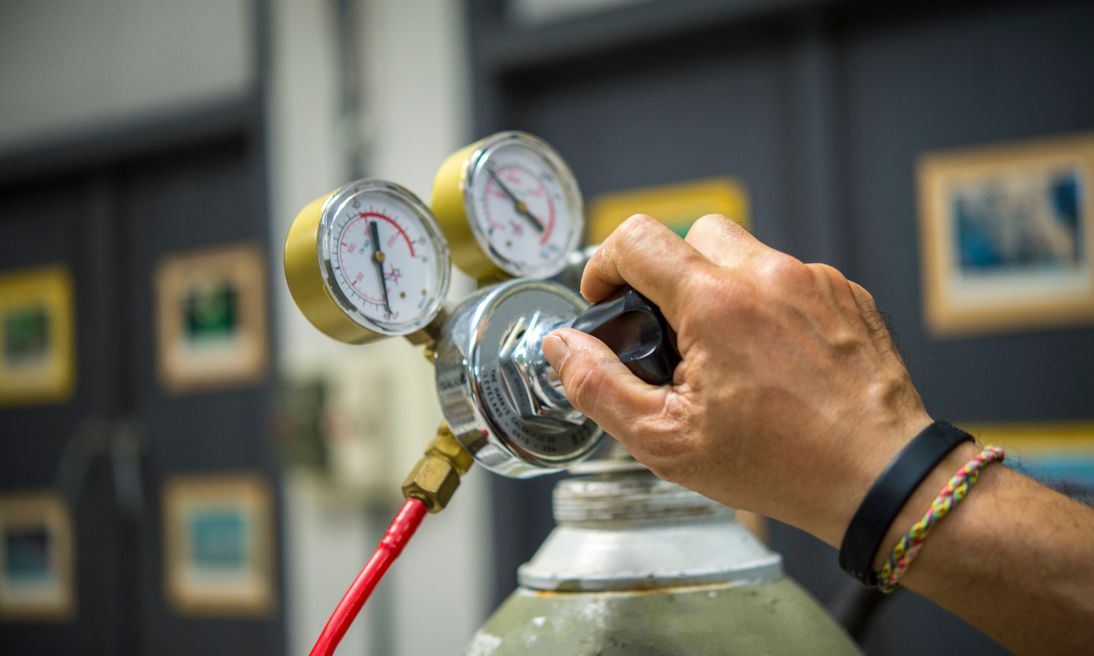
Choosing the right gas regulator is more important than most people realize. The regulator controls pressure, flow, and safety , whether you’re working with oxygen, acetylene, nitrogen, CO₂, or other industrial gases. One of the biggest questions buyers ask is:
Should I use a single-stage regulator or a double-stage regulator?
Below is a simple, friendly, and helpful breakdown based on what people search for online and on AI platforms.
What Is a Single-Stage Regulator?
A single-stage regulator reduces the high cylinder pressure to your working pressure in one step.
It uses one diaphragm or piston and one valve to control the pressure.
What are the advantages of a single-stage regulator?
- Easy to use
- More affordable
- Lightweight and compact
- Great for short-term or portable applications
What are the disadvantages?
- Output pressure may change as the cylinder empties
- Needs occasional readjustment
- Not ideal for tasks requiring ultra-steady pressure
Where is a single-stage regulator commonly used?
- Small workshops
- Portable welding
- Short-term gas usage
- Applications where slight pressure variations are acceptable
What Is a Double-Stage (Two-Stage) Regulator?
A double-stage regulator reduces pressure in two steps:
- Stage 1 lowers cylinder pressure to a preset intermediate level.
- Stage 2 reduces that intermediate pressure to the final adjustable working pressure.
Why does this matter?
Because these two steps create highly stable pressure, even when cylinder pressure drops.
What are the benefits of double-stage regulators?
- Excellent pressure stability
- Safer for continuous or long-duration use
- Less “droop” when gas flow changes
- Ideal for precision work
Are there any disadvantages?
- More expensive
- Slightly larger and heavier
- More complex internally
Why Does Pressure Rise When the Cylinder Is Almost Empty?
Many users ask:
“Why does my outlet pressure increase when the tank is low?”
This happens mostly with single-stage regulators. As inlet pressure drops, the internal balance changes — causing outlet pressure to creep upward.
This is sometimes called an end-of-tank dump.
How do double-stage regulators prevent this?
The first stage absorbs the inlet changes, so the second stage delivers a steady output.
Which Regulator Should You Use for Your Application?
Here’s a quick, easy guide:
Use a Single-Stage Regulator If:
- You use the gas for short periods
- You don’t need perfectly stable output
- You want a more affordable regulator
- Your cylinder pressure doesn’t vary too much
- You do portable welding or quick jobs
Use a Double-Stage Regulator If:
- You need extremely stable and precise pressure
- You run long or continuous operations
- You use high-pressure cylinders
- You want maximum safety and accuracy
- You work in laboratories, manufacturing, or precision welding
How Do I Choose the Right Regulator?
Here are simple tips anyone can apply:
1. Check your inlet pressure.
Higher pressure systems often benefit from double-stage regulators.
2. Know your required outlet pressure.
Do you need consistent flow? If yes → choose double-stage.
3. Understand your usage time.
Long shifts or continuous flow require better stability.
4. Consider your budget.
Single-stage is cheaper; double-stage offers better performance.
5. Think about safety.
Sensitive or critical applications must prioritize pressure stability.
If unsure, Oxyplus Services Ltd can help you choose the right regulator for oxygen, industrial gases, welding, or medical use.
Search-Based Questions People Commonly Ask (With Clear Answers)
Why is a double-stage regulator more stable?
Because it reduces pressure in two controlled steps, preventing sudden changes in outlet pressure.
Is a single-stage regulator safe?
Yes — for the correct application. They are safe when used within their rated limits.
Can I convert a single-stage regulator into a double-stage?
No. They are built differently internally.
Do double-stage regulators last longer?
They often do because pressure is distributed between two stages, reducing wear.
Which regulator is better for oxygen cylinders?
For professional, medical, or continuous usage — double-stage is recommended.
For simple or occasional use — single-stage works fine.
FAQ Section
1. What is the main difference between single-stage and double-stage regulators?
Single-stage adjusts pressure in one step; double-stage adjusts it in two steps for better stability.
2. What happens if I use the wrong regulator?
You may face pressure instability, inefficient gas use, or safety risks.
3. Which regulator is better for welding?
- Light or portable welding → single-stage
- Precision welding → double-stage
4. Do regulators need maintenance?
Yes. Regular inspection, cleaning, and leak checks are important for safety.
5. Does cost matter?
Yes — but performance and safety should be the priority for professional tasks.
Conclusion
Both single-stage and double-stage regulators have unique advantages. Your choice depends on your pressure stability needs, usage time, safety requirements, and budget.
If you’re unsure which regulator best suits your oxygen or industrial gas application, Oxyplus Services Ltd is here to guide you with expert recommendations and reliable products in Uganda.