
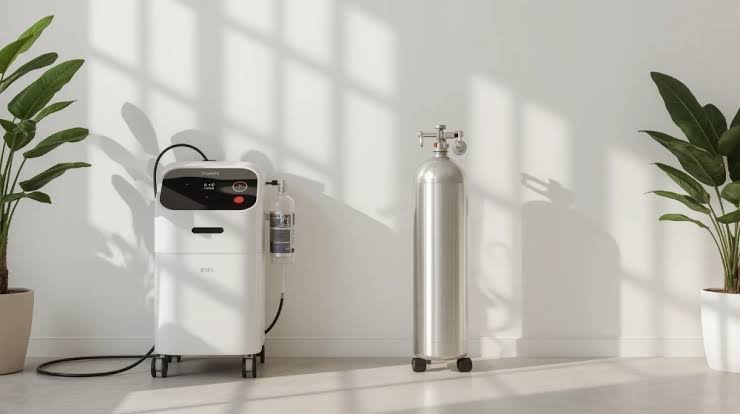
Reliable oxygen supply is one of those things that only gets attention when it’s missing — and by then, it’s already a crisis. Whether you’re running a health centre, a maternity ward, a private clinic, or arranging oxygen therapy for a patient at home, one of the first decisions is: do you rely on an oxygen concentrator, medical oxygen cylinders, or a combination of both?
They solve the same basic need — delivering medical-grade oxygen to a patient — but they work very differently, and each comes with real trade-offs worth understanding before you commit.
How They Actually Work
Medical oxygen cylinders contain compressed, pre-purified medical oxygen, filled and supplied by a certified gas provider. The cylinder is a fixed, finite supply — once it’s empty, it needs to be refilled or swapped for a full one.
Oxygen concentrators are electrically powered machines that draw in ambient room air, filter out nitrogen and other gases, and deliver a continuous stream of concentrated oxygen to the patient. As long as there’s power, a concentrator keeps producing oxygen — it isn’t a fixed, depletable supply the way a cylinder is.
That single difference — stored supply vs. continuous production — is what drives almost every other trade-off between the two.
Comparing the Two Where It Matters
Reliability and Power Dependence
Cylinders don’t depend on electricity at all, which makes them the more dependable choice during power outages or in facilities with unstable grid supply — a real consideration in many parts of Uganda. Concentrators need a stable power source (or backup power/generator) to function, so any facility relying primarily on concentrators needs a solid backup power plan for outages.
Portability and Emergency Use
Cylinders, particularly smaller ones, are easier to move quickly — into an ambulance, between wards, or to a patient’s bedside during an emergency — with no setup beyond attaching a regulator. Concentrators are generally less mobile (though portable models exist) and need to be positioned near a power outlet, making them better suited to a fixed care location than emergency transport.
Ongoing Cost
Cylinders involve a recurring cost: refills, transport, and cylinder rental or ownership. For continuous, long-term oxygen use, this adds up over time. Concentrators have a higher upfront cost but lower ongoing running costs — mainly electricity and periodic maintenance/filter replacement — which can make them more economical for patients or facilities needing oxygen over weeks or months rather than days.
Oxygen Purity and Flow Consistency
Medical cylinders are filled with certified, consistently pure medical-grade oxygen, tested and regulated at the point of filling. Concentrator output purity can vary slightly depending on the machine’s condition, filter maintenance, and altitude, and typically delivers oxygen in a lower concentration range than pure cylinder oxygen — usually adequate for standard therapy, but worth checking against the flow rate a patient actually needs.
Maintenance
Cylinders require almost no maintenance beyond safe handling, storage, and periodic hydrostatic testing/certification by the supplier. Concentrators are mechanical devices with filters, motors, and sieve beds that need regular cleaning, filter changes, and servicing to keep performing correctly — neglect here directly affects oxygen output quality.
Best Fit for Continuous vs Intermittent Use
For patients needing oxygen support continuously over long periods (chronic respiratory conditions, extended home care), a concentrator is often the more practical and cost-effective long-term option. For short-term, high-flow, or emergency situations — surgery, ICU support, ambulance transport, or backup during outages — cylinders remain the standard.
Quick Comparison
| Factor | Medical Oxygen Cylinder | Oxygen Concentrator |
|---|---|---|
| Power required | No | Yes |
| Best for | Emergencies, surgery, backup, short-term high flow | Continuous/long-term therapy, home care |
| Portability | High (especially smaller cylinders) | Moderate (portable models available) |
| Upfront cost | Lower | Higher |
| Ongoing cost | Recurring refill costs | Mainly electricity + servicing |
| Oxygen purity | Certified medical-grade, consistent | Generally adequate, depends on maintenance |
| Maintenance needs | Low (handling + certification) | Moderate (filters, servicing) |
| Works during power outage | Yes | No, unless backed up by generator/battery |
Why Many Ugandan Facilities Use Both
In practice, most hospitals and well-run clinics in Uganda don’t choose one over the other — they use concentrators for routine, continuous oxygen therapy on wards, while keeping a stock of certified medical oxygen cylinders on hand for emergencies, power outages, surgery, and patient transport. This combination gives you the cost efficiency of concentrators day-to-day, with the reliability of cylinders when things don’t go to plan.
For home care patients, the choice often comes down to how long-term the need is and how stable the household’s power supply is. Short-term recovery after a hospital stay may only need a rented cylinder; a chronic condition requiring daily oxygen for months is usually better served by a concentrator, ideally with a backup cylinder for outages.
Questions Worth Asking Before You Decide
- How many hours per day will oxygen be needed, and for how long overall?
- How stable is power supply at the facility or home?
- Is this for routine therapy, emergencies, or both?
- What flow rate (litres per minute) has the patient’s doctor recommended?
- Is there someone on-site who can maintain a concentrator, or manage cylinder logistics?
Getting clear answers to these questions upfront avoids the common mistake of investing in equipment that doesn’t match how oxygen will actually be used.
Talk to OxyPlus About Your Oxygen Supply Needs
OxyPlus supplies certified medical oxygen cylinders across Uganda, backed by genuine fills and reliable delivery. If you’re deciding between cylinders, concentrators, or a combination of both for your clinic, hospital, or home care setup, our team can walk you through what fits your specific situation. Contact us to discuss your requirements, or browse our medical gases range.
Frequently Asked Questions
1. Is an oxygen concentrator as safe as a medical oxygen cylinder?
Yes, when properly maintained. Concentrators are designed to deliver medical-grade oxygen concentration for standard therapy, but their output depends on regular filter maintenance and servicing — unlike cylinders, which are certified and tested at the point of filling.
2. Can an oxygen concentrator work during a power outage?
No, standard concentrators need a continuous power supply to function. Facilities relying on concentrators should have backup power (generator or battery system) or keep certified oxygen cylinders on hand for outages.
3. Which is cheaper long-term — a cylinder or a concentrator?
For continuous, long-term oxygen use, a concentrator is usually more cost-effective over time despite its higher upfront cost, since it avoids repeated refill charges. For short-term or occasional use, a cylinder is typically the more economical choice.
4. Do hospitals in Uganda use concentrators or cylinders?
Most hospitals and clinics use a combination: concentrators for routine ward-based therapy, and certified medical oxygen cylinders for emergencies, surgery, patient transport, and as backup during power interruptions.
5. What flow rate do I need for home oxygen therapy?
This should always be determined by a doctor based on the patient’s condition, not chosen independently. The prescribed flow rate (in litres per minute) then determines whether a standard concentrator, high-flow device, or cylinder setup is appropriate.
6. How do I know if I’m getting genuine, full medical oxygen in a cylinder?
Source cylinders from a certified, reputable supplier, check that seals and valves are intact, and confirm fill weight/pressure at handover rather than assuming a cylinder is full simply because it was swapped.