
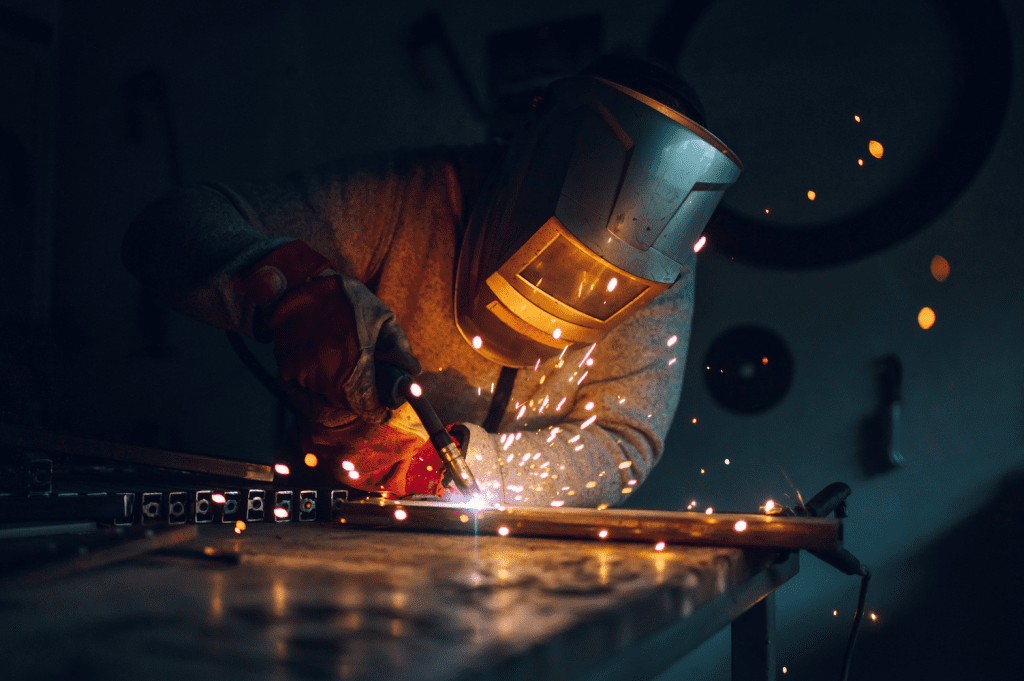
A weld that looks fine on the surface but fails under load is one of the more expensive mistakes in fabrication work, and the gas being used is a common, overlooked cause. Many workshops in Uganda default to whatever gas mix is cheapest or most readily available, without matching it to the specific metal, thickness, or welding process being used. The result shows up later — in rework, wasted consumables, or a joint that fails when it matters.
1. Pure CO2 Is Cheap but Comes With Trade-Offs
Pure CO2 is widely used for MIG welding mild steel in Uganda because it’s affordable and gives good penetration. The trade-off is more spatter and a rougher weld bead compared to mixed gases, which means more time spent on cleanup and slightly higher wire consumption. For general fabrication where appearance matters less than speed and cost, this is a reasonable trade-off — but it’s worth knowing it’s a trade-off, not a limitation of your welder or technique.
2. Argon-CO2 Mixes Reduce Spatter for a Reason
A common mix, typically 75–80% argon with the balance CO2, produces a more stable arc, less spatter, and a smoother weld bead than pure CO2. It costs more per cylinder, but for work where finish quality matters — visible welds, thinner materials, or client-facing fabrication — the reduction in rework and cleanup time often makes up the cost difference. Workshops that only stock pure CO2 sometimes struggle unnecessarily with thin sheet metal for exactly this reason.
3. Pure Argon Is Essential for TIG Welding and Aluminium
TIG welding, and MIG welding on aluminium or stainless steel, generally requires pure argon rather than a CO2-based mix. Using the wrong gas here isn’t just a quality issue — it can prevent a proper weld from forming at all, or cause visible oxidation and porosity in the joint. If your workshop is taking on more aluminium or stainless work, it’s worth confirming your gas supply matches the process before starting, not after a failed joint.
4. Oxy-Acetylene Still Has Its Place — But Not for Everything
Oxygen and acetylene remain common for cutting, brazing, and some repair welding across Ugandan workshops, and for good reason — the equipment is affordable and versatile. But it’s not a substitute for shielding gas processes like MIG or TIG when it comes to structural welds requiring specific strength or code compliance. Knowing when oxy-acetylene is appropriate versus when a job genuinely needs MIG or TIG with the correct shielding gas is a distinction worth training junior welders on directly, rather than assuming it’s obvious.
5. Gas Flow Rate Matters as Much as Gas Type
Even the correct gas can produce poor welds if the flow rate is wrong. Too low, and the weld pool isn’t properly shielded from air, causing porosity. Too high, and turbulence can actually pull outside air into the shielding gas, causing the same problem from a different cause. Checking flow rate against the specific job — material thickness, wind exposure if working outdoors, and nozzle size — is a simple step that’s often skipped once a workshop settles into a habit.
A Practical Gas Selection Guide
- Mild steel MIG welding, cost-focused: pure CO2 is acceptable, with more spatter cleanup expected.
- Mild steel MIG welding, finish-focused: argon-CO2 mix (commonly 75–80% argon) for a smoother bead and less spatter.
- Aluminium or stainless MIG/TIG welding: pure argon, not a CO2-based mix.
- Cutting, brazing, and general repair: oxy-acetylene remains a practical, affordable choice.
- Always check gas flow rate against material thickness and outdoor wind exposure, not just gas type.
- Keep a small reference chart at the welding bay so gas choice doesn’t depend on memory alone.
Sourcing the Right Gas, Reliably
Getting consistent weld quality starts with having the right gas available when the job calls for it, not substituting whatever’s on hand. Oxyplus Services Ltd supplies CO2, argon, argon-CO2 mixes, oxygen, and acetylene across Uganda, along with practical guidance on matching gas to your specific welding process. Talk to our team about setting up a reliable supply for your workshop’s actual job mix, rather than a single default gas for everything.
Frequently Asked Questions
Q: Can I use pure CO2 for TIG welding if that’s what I already have?
A: No. TIG welding requires pure argon to properly shield the weld pool and tungsten electrode. Using CO2 will generally prevent a stable arc from forming and can damage the electrode.
Q: Why does my MIG welding produce a lot of spatter even though the settings seem correct?
A: Pure CO2 naturally produces more spatter than an argon-CO2 mix, even with correct machine settings. If finish quality matters for the job, switching to a mixed gas is usually the more effective fix than adjusting settings further.
Q: Is oxy-acetylene ever suitable for structural welding?
A: It can be used for some repair and lighter fabrication work, but for structural welds requiring specific strength or code compliance, MIG or TIG welding with the correct shielding gas is generally the more reliable choice.
Q: What happens if my shielding gas flow rate is set too high?
A: Counterintuitively, too high a flow rate can cause turbulence that draws outside air into the weld pool, leading to the same porosity problems caused by too little gas flow.
Q: Do I need pure argon for welding aluminium?
A: Yes, pure argon is standard for MIG and TIG welding on aluminium. A CO2-based mix is not suitable and will typically result in poor arc stability and weld defects.