
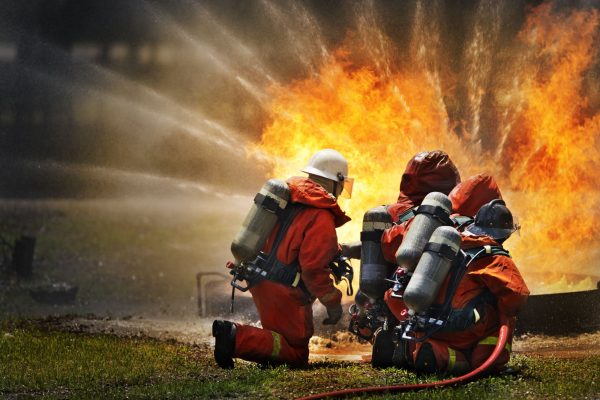
In recent years, Uganda has witnessed devastating fires — in markets, factories, schools, and residential areas — causing loss of life, injury, and billions of shillings in property damage. The Uganda Police Fire Prevention and Rescue Services respond to hundreds of fire incidents annually, with electrical faults, LPG gas leaks, open flames, and arson among the leading causes.
Yet the majority of these fires could have been contained — or prevented entirely — with basic fire safety infrastructure: a working extinguisher, a functioning alarm, trained staff, and a written emergency plan.
This guide is for business owners, facility managers, HR professionals, building landlords, and home occupiers who want to understand fire safety practically and completely.
Key Statistic: Industry estimates suggest that up to 70% of businesses that suffer a major fire never fully recover. Yet less than 30% of small businesses in Uganda have a documented fire emergency plan.
Understanding Fire — The Fire Triangle
Every fire needs three elements to start and sustain itself: fuel, oxygen, and heat. Remove any one of these and the fire dies. This simple concept — the fire triangle — is the foundation of all fire suppression strategies.
- Fuel: anything that burns — wood, paper, fabric, chemicals, cooking oil, gas.
- Oxygen: provided by ambient air (21% oxygen is more than enough to sustain most fires).
- Heat: an ignition source — electrical fault, open flame, static spark, friction.
Different suppression methods work by attacking different sides of this triangle. Water cools (removes heat). CO₂ extinguishers displace oxygen. Dry powder smothers fuel surfaces. Knowing this helps you understand why the right extinguisher for the right fire class is absolutely critical.
Fire Classes — The Most Important Concept in Fire Safety
Not all fires are the same. Using the wrong extinguisher can make a fire dramatically worse — or even fatal. Uganda’s fire safety standards follow internationally recognised fire classes:
Class A — Ordinary Combustibles
Materials: Wood, paper, cloth, rubber, many plastics. Extinguishers: Water, foam, ABC dry powder, wet chemical.
Class B — Flammable Liquids and Gases
Materials: Petrol, diesel, paint, cooking oil, LPG. Extinguishers: CO₂, foam, dry powder. NEVER use water on Class B fires — it spreads burning liquid.
Class C — Electrical Fires
Materials: Electrical panels, wiring, appliances, computers. Extinguishers: CO₂ or dry powder (non-conductive). NEVER use water — electrocution risk.
Class D — Combustible Metals
Materials: Magnesium, titanium, sodium. Extinguishers: Specialist dry powder only. Rare in standard commercial settings but critical in metal fabrication workshops.
Class F — Cooking Fires
Materials: Cooking oils and fats (extremely high-temperature fires). Extinguishers: Wet chemical. This class is critically important for restaurants, hotels, and canteens in Uganda.
⚠️ Critical Warning: Using a water extinguisher on a Class B (flammable liquid) or Class F (cooking oil) fire can cause a violent steam explosion, projecting burning liquid across the room. Always read the label before using any extinguisher.
A Complete Guide to Fire Extinguisher Types
Uganda’s commercial and industrial sectors commonly encounter these fire extinguisher types:
Water Extinguishers (Red)
Best for Class A fires. Works by cooling burning material. Cheapest and most common. Not suitable for kitchens, electrical areas, or anywhere flammable liquids are present.
CO₂ Extinguishers (Black Label)
Best for Class B and C fires. Displaces oxygen without leaving residue — ideal for offices, server rooms, and electrical switchrooms. The cold CO₂ discharge can cause freeze burns; always hold by the handle, never the horn.
Dry Powder / ABC Extinguishers (Blue Label)
Versatile multi-class extinguisher (A, B, C). Creates a powder cloud that interrupts the chemical chain reaction of fire. Leaves significant residue — messy in enclosed spaces. Common in warehouses, factories, vehicles, and outdoor settings.
Foam Extinguishers (Cream Label)
Effective on Class A and B fires. Forms a foam blanket that smothers fuel and cools the surface. Good choice for fuel storage areas, garages, and warehouses holding mixed materials.
Wet Chemical Extinguishers (Yellow Label)
Specifically designed for Class F (cooking oil) fires. Creates a soapy foam layer that cools the oil and prevents re-ignition. Mandatory in commercial kitchens — no substitute is adequate.
How Many Extinguishers Does Your Building Need?
Uganda’s building codes and fire safety regulations (aligned with East African and international standards) set minimum requirements for fire extinguisher provision. As a practical baseline:
- One 9-litre water or 6kg dry powder extinguisher per 200 square metres of floor area (minimum one per floor).
- One CO₂ extinguisher in every electrical room, server room, and switchgear area.
- One wet chemical extinguisher within 10 metres of every commercial cooking point.
- At least one extinguisher at every main exit/entry point in high-risk areas.
- Vehicle-mounted extinguishers for all commercial vehicles, fuel tankers, and emergency response vehicles.
These are minimums. A proper fire risk assessment — conducted by a certified fire safety professional — will give you site-specific requirements. Oxyplus Services Ltd can assist with this assessment.
The 5-Step PASS Technique — Using an Extinguisher Correctly
Having an extinguisher is useless if nobody knows how to use it. Train every employee on the PASS technique:
- P — Pull the safety pin from the handle.
- A — Aim the nozzle at the base of the fire, not the flames.
- S — Squeeze the handle to discharge the agent.
- S — Sweep side to side across the base of the fire until extinguished.
Most portable extinguishers discharge in 10–30 seconds. Only attempt to fight a fire with an extinguisher if: (1) the fire is small and contained, (2) you have a clear exit behind you, (3) you are trained. If in doubt, evacuate and call 999.
Fire Safety Obligations for Businesses in Uganda
Under Ugandan law and international best practice, businesses have clear obligations:
- Conduct an annual fire risk assessment and document findings.
- Install and maintain fire alarms and detection systems in all commercial buildings.
- Provide sufficient, correctly rated fire extinguishers and service them annually.
- Train all employees in fire evacuation procedures and extinguisher use.
- Post fire escape plans visibly on every floor.
- Maintain clear, unobstructed fire exits at all times.
- Keep records of all fire safety equipment inspections and staff training.
Failure to comply with fire safety regulations exposes businesses to criminal liability, insurance voidance, and — most critically — the risk of preventable death. Regulatory bodies including Uganda Police Fire & Rescue Services conduct inspections, and non-compliant businesses can be ordered to close.
How Oxyplus Services Ltd Protects Ugandan Workplaces
Oxyplus Services Ltd is not just a gas company. It is Uganda’s integrated gas and fire safety solutions provider — a rare combination that makes it the go-to partner for complete workplace safety.
Fire safety products and services from Oxyplus include:
- Fire Extinguishers — full range of types (CO₂, dry powder, wet chemical, foam, water) in commercial and industrial sizes.
- Fire Suppression Systems — for server rooms, kitchens, warehouses, and industrial facilities.
- Breathing Apparatus — critical equipment for first responders and industrial emergency teams.
- Protective Clothing — fire-resistant garments, helmets, and gloves for firefighters and safety officers.
- Fire Alarms & Detection Systems — early warning systems that save lives.
- Maintenance & Servicing — annual inspection, recharging, and certification of extinguishers.
Oxyplus also brings a unique advantage: because it manufactures CO₂ in-house, it can supply CO₂-based fire suppression systems with unmatched speed, traceability, and cost efficiency. No other supplier in Uganda offers this integrated manufacturing-to-deployment capability.
✅ Oxyplus Certifications: ISO 9001 | Uganda National Bureau of Standards (UNBS) | Petroleum Authority of Uganda | Uganda Police Approved | Uganda Manufacturers Association Member — comprehensive credentials that confirm Oxyplus meets Uganda’s highest standards for gas and fire safety compliance.
Building a Fire Safety Culture — Beyond Equipment
Extinguishers and alarms are essential — but fire safety is ultimately a culture, not just a checklist. Here is how to build one in your organisation:
- Appoint a designated Fire Safety Officer responsible for compliance, training, and emergency planning.
- Conduct fire drills at least twice a year — timed, documented, and reviewed.
- Post emergency numbers (Uganda Police Fire: 999 / 0800 199 000) visibly throughout the building.
- Hold a brief fire safety induction for every new employee on Day 1.
- Reward reporting — encourage staff to flag fire hazards without fear of repercussion.
- Review and update your fire risk assessment after any major renovation, change in operations, or incident.
The investment in fire safety culture is small. The cost of not making it can be catastrophic — in lives, in property, in reputation, and in legal liability.
Protect What Matters — Partner With Oxyplus Services Ltd
Whether you need to equip a single office with a CO₂ extinguisher, outfit a factory floor with a full fire suppression system, or train an emergency response team, Oxyplus Services Ltd is ready to help.
Uganda’s leading gas manufacturer and fire safety solutions provider. Certified. Reliable. Local.